
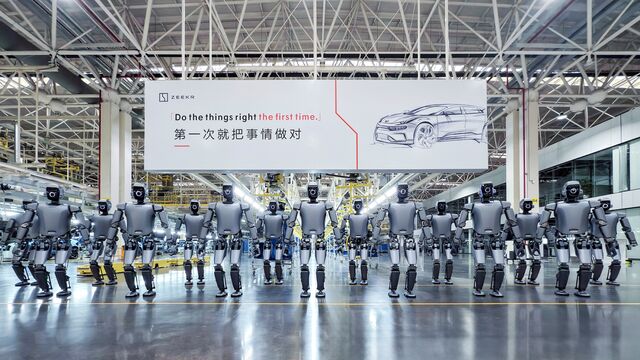
China’s humanoid robots are stepping into the global spotlight as startups like EngineAI and Unitree rapidly advance machine intelligence and physical robotics. Just weeks ago, EngineAI showcased its robot mimicking a dance routine—an unusual but meaningful demonstration of machine learning and motion mastery.
At first glance, it might seem like entertainment. However, this playful demo signals something deeper: China’s transition from follower to frontrunner in humanoid robotics. For decades, American firms dominated the scene. Now, Chinese companies are making waves with public trials, innovation, and strong government backing.
In April, Beijing hosted the world’s first robot half-marathon. The following month, Unitree Robotics presented a robot kickboxing match. Although many machines stumbled or fell, these events reflected ambition rather than perfection.
Meanwhile, China already leads in robotic integration on factory floors. With over 470 robots per 10,000 workers—surpassing both the US and Japan—the nation is now steering humanoids toward roles in healthcare, logistics, tourism, and even defense.
Thanks to government support and industrial expertise, firms like EngineAI are scaling fast. CEO Zhao Tongyang estimates that 50 to 60 Chinese startups are now developing humanoids. His company, for example, already holds hundreds of confirmed orders.
Zhao is optimistic. He believes China’s humanoid robots will eventually dominate global markets. Elon Musk seems to agree. While promoting Tesla’s Optimus robot, he admitted that ranks two through ten in humanoid robotics may all be Chinese companies.
Clearly, the stakes are enormous. Citigroup recently forecasted that humanoid robots and related services could reach a $7 trillion market by 2050, with 648 million machines deployed worldwide. This signals not just a tech boom, but a full-scale workforce transformation.
EngineAI’s success stems from relentless engineering. The company redesigned complex joint systems, reducing costs from 30,000 yuan to just a fraction. In parallel, Zhao and his team focused on replicating a natural walking gait. Using neural networks and human motion data, their robots learned to move like toddlers gaining balance.
This leap forward isn’t just technological—it’s strategic. Over a decade ago, China’s leaders mapped out goals to become global leaders in key tech sectors, including robotics. Since then, cities like Shenzhen have helped companies like EngineAI secure funding and scale operations.
As a result, these efforts coincide with broader challenges. China faces a shrinking workforce, expected to decline by 22% by 2050. Manufacturing, in particular, is short by an estimated 30 million workers this year. As younger generations avoid factory jobs, humanoid robots are seen as a viable substitute.
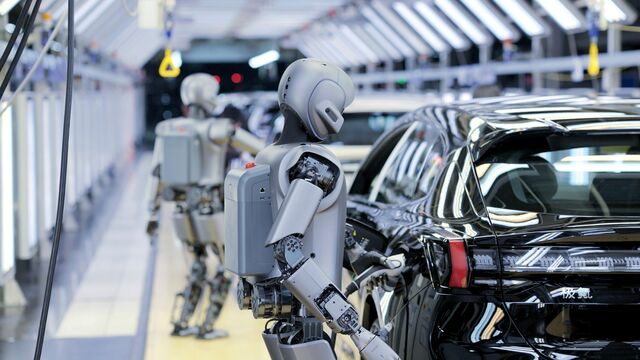
Therefore, startups like Leju Robotics are building bots to deliver medicine in care homes, inspect factories, and support education. UBTech has already deployed robots to help assemble iPhones and detect hazardous leaks in vehicle production lines.
Moreover, China’s global presence is growing. International robotics experts now recognize the country’s edge. With rising production volumes and falling costs, Chinese robots are inching closer to mainstream industrial adoption.
Of course, the path forward isn’t flawless. Events like robot marathons and kickboxing matches revealed real-world limitations. Some bots tripped, malfunctioned, or reacted awkwardly.
Still, global optimism continues to build. Citigroup calls humanoids “physical AI,” projecting rapid growth across retail, hospitality, health, and logistics. Elon Musk aims to scale Tesla’s Optimus robots to one million units per year by 2029.
If the expected unit cost stays around $25,000, Citigroup analysts believe these machines could pay for themselves in under nine months in minimum-wage environments—less in higher-wage economies.
While Western countries remain cautious, China is betting boldly on humanoid robotics. The government has pledged 1 trillion yuan ($138 billion) toward robotics and high-tech development over the next two decades—more than any Western power.
Already, hundreds of humanoids from Shenzhen-based companies are performing real-world tasks. From guiding museum tours to sorting car parts, these machines are reshaping labor.
In conclusion, China’s humanoid robots reflect a national strategy to lead in AI, robotics, and automation. With strong R&D, policy alignment, and industrial synergy, China is not just joining the race—it may be winning it.
READ: NVIDIA Unveils Mega Omniverse Blueprint for AI-Driven Robotics