
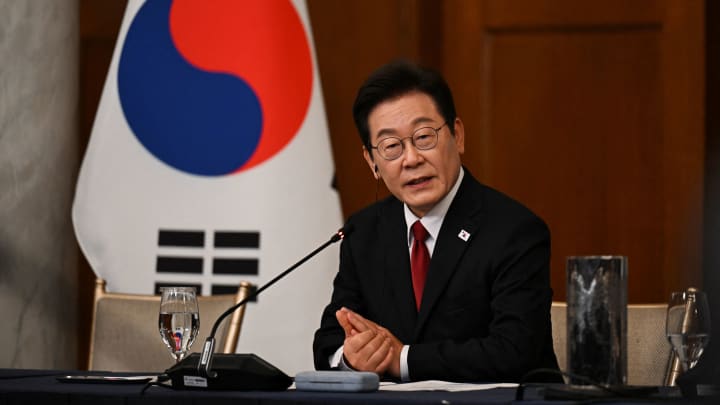
South Korea U.S. trade talks face a critical moment. President Lee Jae Myung warned that U.S. demands for massive cash investments could destabilize the Korean economy. He said the U.S. plan, which calls for $350 billion in funding, risks repeating the 1997 financial crisis.
U.S. Investment Demands Raise Concerns
The United States and South Korea reached a verbal deal in July. Washington promised to cut Trump-era tariffs on Korean goods. In return, Seoul agreed to provide significant investments.
Negotiations stalled over how to manage the funds. “Without a currency swap, if we were to withdraw $350 billion in the manner the U.S. demands, South Korea would face a situation as it had in the 1997 financial crisis,” Lee said.
Seoul has suggested a swap line to protect the won. Japan, which secured a similar deal, had stronger reserves and an existing swap with Washington. South Korea lacks these cushions, making it more vulnerable.
Fallout From Hyundai Immigration Raid
Tensions increased after a U.S. immigration raid in Georgia. Officials detained over 300 South Korean workers at a Hyundai-LG battery plant. Images of the workers in shackles sparked anger in Seoul and raised fears about the safety of future investments.
Lee sought to ease concerns. He praised Trump for offering to resolve the situation and called the raid the result of “overzealous law enforcement.” He stressed that the alliance with Washington remains vital, though he warned that such incidents could discourage Korean companies.
Trade Deal Stumbling Blocks
Commerce Secretary Howard Lutnick urged Seoul to accept terms similar to Japan’s agreement. Otherwise, tariffs would remain.
Lee pushed back, saying commercial safeguards are essential. “Reaching detailed agreements that guarantee commercial reasonableness is now the central task – yet it also remains the biggest obstacle,” he explained. He noted that U.S. proposals so far offer little assurance of financial soundness.
The Trump administration wants control over how the money is allocated. That approach worries Seoul, which insists on risk protections. South Korean officials proposed that only commercially viable projects should qualify.
Defense, Security, and Regional Dynamics
Lee confirmed South Korea’s willingness to increase defense spending. He made clear, however, that defense costs should remain separate from trade negotiations.
On North Korea, he said he was not optimistic about new talks. Pyongyang has ignored outreach. Still, Lee urged Trump to consider a meeting with Kim Jong Un during his upcoming Asia trip.
Regional tensions weigh heavily. Lee warned of growing cooperation between North Korea, Russia, and China. He described the alignment as “a very dangerous situation for Korea.” He added that democratic allies—South Korea, Japan, and the U.S.—risk deeper confrontation with this bloc.
Outlook for Seoul and Washington
The outcome of the South Korea U.S. trade talks depends on both sides finding common ground. Lee wants to protect Korea’s financial stability while preserving the alliance. Washington demands major investments but Seoul fears another economic shock.
As Lee prepares to address the United Nations and chair a Security Council meeting, he aims to present South Korea as a stable partner. Yet unresolved trade disputes, immigration tensions, and regional rivalries show the fragile path Seoul must navigate in the months ahead.