
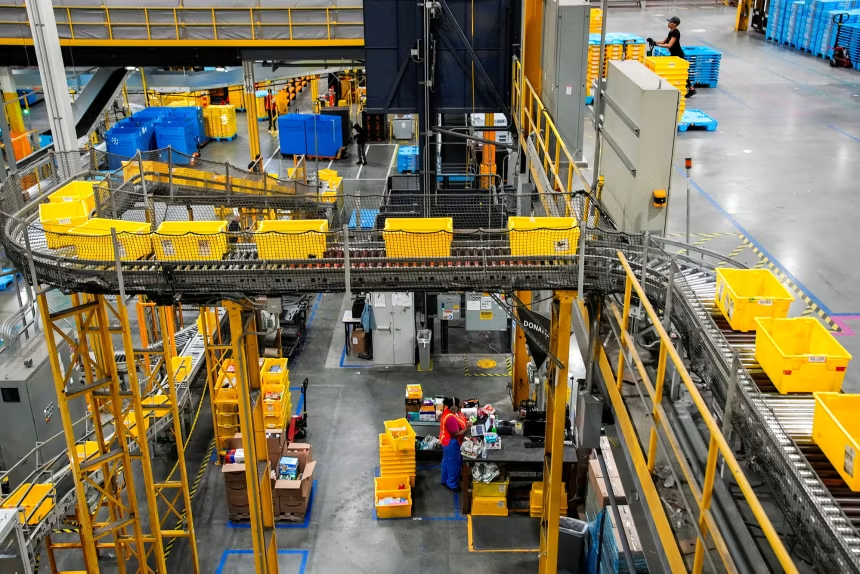
Amazon CEO Andy Jassy recently revealed that the rising prices seen on Amazon’s platform can be partially attributed to the tariffs introduced under the Trump administration. In an interview at the World Economic Forum in Davos, Switzerland, Jassy explained how the tariffs, which were rolled out in the spring of 2025, have led to higher costs for some items sold on Amazon. While Amazon had stocked up on inventory to avoid the immediate effects of the tariffs, that supply began to run out by the fall, leading to higher prices for consumers.
The Impact of Tariffs on Amazon’s Pricing
Jassy noted that some of Amazon’s third-party sellers, in particular, are passing the increased costs onto consumers. “So you start to see some of the tariffs creep into some of the prices, some of the items,” Jassy explained. “Some sellers are deciding that they’re passing on those higher costs to consumers in the form of higher prices, some are deciding that they’ll absorb it to drive demand and some are doing something in between.”
This admission represents a stark contrast to comments made by Jassy last June, when he stated that Amazon had not seen “prices appreciably go up” despite the implementation of tariffs. His previous comments came after Amazon faced criticism from Trump’s administration for allegedly planning to showcase how tariffs were affecting prices. Following a conversation between Trump and Amazon founder Jeff Bezos, Amazon clarified that this plan had only been considered for its Haul site, which sells products priced below $30, and not for its main site.
Now, Jassy has acknowledged the reality of the situation: “We’re going to do everything we can to work with our selling partners to make prices as low as possible for consumers, but you don’t have endless options.” This reflects the growing tension between keeping prices low and the unavoidable impact of increased tariffs on products imported to the U.S.
Amazon’s Official Statement on Price Changes
Despite Jassy’s comments, Amazon has downplayed the extent of the price hikes. A spokesperson for the company told CNN that while some sellers and brands may have raised prices, the overall prices of products on Amazon had not changed beyond normal fluctuations. “While we are seeing prices for some sellers and some brands go up, overall the prices of products on Amazon have not changed outside of normal fluctuations,” the spokesperson said.
However, the company’s admission that some prices have risen highlights a broader trend across the retail industry. The increase in tariffs has led many companies to re-evaluate their pricing strategies to account for the additional costs. Amazon, one of the world’s largest e-commerce platforms, is certainly feeling the impact of these changes, and this has led to higher costs for certain items sold through the site.
The Bigger Picture: Impact on the Retail Industry
Amazon is not the only retailer experiencing price hikes due to tariffs. Other major retailers, including Walmart, Target, and Home Depot, have publicly acknowledged that the tariffs are making products more expensive for consumers. As the U.S. government continues to impose these tariffs, the cost of goods—particularly imported products—has been steadily increasing. While consumer inflation remained modest in 2025, many businesses surveyed by the Federal Reserve in its latest Beige Book reported that they plan to increase prices even more in the coming year due to the ongoing impact of tariffs.
This has raised concerns that consumers may start to feel the pinch more acutely in the near future. Many companies are warning that they will need to pass on these additional costs to customers, and with inflationary pressures still present, the U.S. economy could see further increases in the cost of living.
The White House Response: Tariffs Are Paid by Foreign Exporters
The White House has maintained that foreign exporters are shouldering the burden of the tariffs, not U.S. consumers. White House spokesman Kush Desai reiterated this stance, stating, “The average tariff imposed by America has increased by almost tenfold under President Trump, and inflation has continued to cool from Biden-era highs.” He continued, “The Administration has consistently maintained that foreign exporters who depend on access to the American economy, the world’s biggest and best consumer market, will ultimately pay the cost of tariffs, and that’s what’s playing out.”
This assertion aligns with the Trump administration’s long-held belief that tariffs would primarily affect foreign producers, rather than U.S. consumers. The idea behind the tariffs was to encourage domestic production and reduce the U.S. trade deficit by making imported goods more expensive. However, as the tariffs remain in place and the costs continue to rise, many consumers are seeing higher prices at the checkout.
The Ongoing Debate Over Tariffs and Their Effect on Consumers
The debate over tariffs and their impact on consumers is far from settled. While the U.S. government maintains that foreign exporters are footing the bill for the tariffs, retailers and consumers are seeing the opposite effect. As Amazon’s Andy Jassy noted, some sellers are passing on the increased costs to consumers in the form of higher prices. With more retailers expected to follow suit, the question remains whether the U.S. economy can absorb these additional costs without causing further inflation.
Moreover, as the cost of living rises, many consumers are growing frustrated with the lack of transparency in how tariffs are affecting their wallets. The increase in prices for everyday items, from electronics to household goods, is a direct result of the tariffs, yet there is little relief in sight for American consumers.
The Future of Tariffs and the Retail Landscape
As the retail industry navigates the complex landscape of tariffs and rising costs, companies like Amazon will continue to adjust their pricing strategies to cope with the changing economic environment. While some consumers may see higher prices on their Amazon orders, the overall impact of the tariffs on the retail industry remains to be seen. With other major retailers also facing similar challenges, it is clear that the effect of these tariffs will continue to ripple through the economy.
As the Biden administration works to address inflationary pressures and its trade policies, the future of tariffs and their long-term effects on U.S. consumers will be a critical issue. For now, retailers will likely continue to grapple with the decision of whether to absorb the increased costs themselves or pass them on to consumers, leaving shoppers with higher bills and uncertain pricing ahead.