
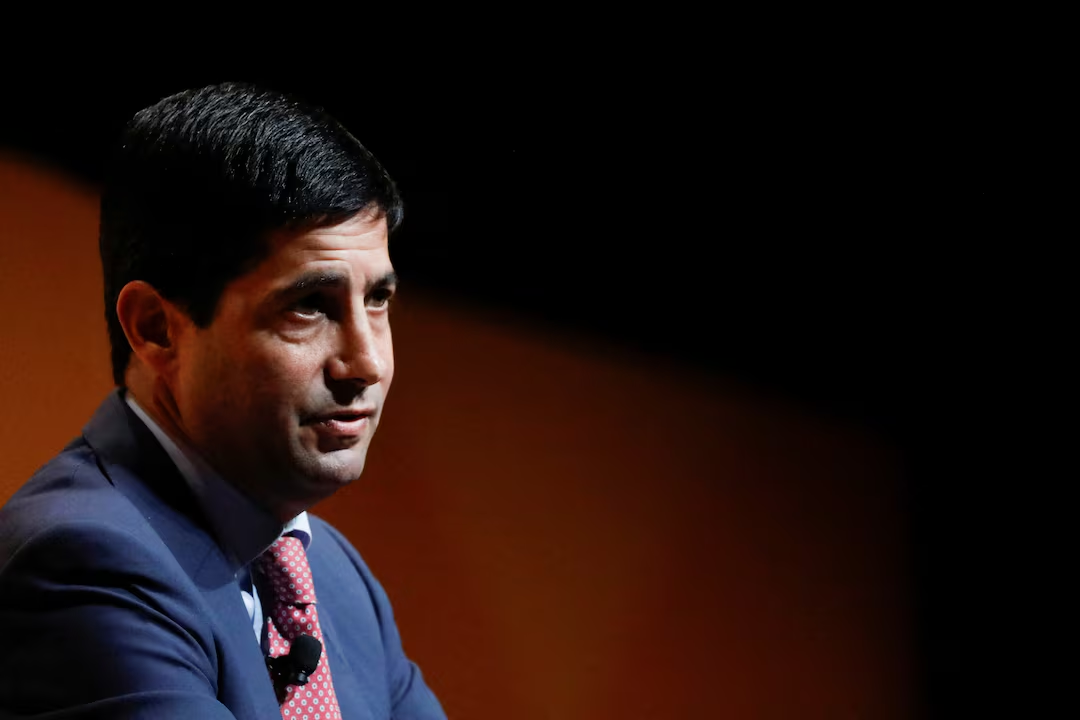
President Donald Trump’s nomination of former Governor Kevin Warsh to chair the Federal Reserve has thrust the issue of Fed independence into the political spotlight. The selection, announced via social media, places a longtime critic of the central bank’s recent direction in line to lead it. Trump framed Warsh as a “central casting” choice who would be a “GREAT” chairman. However, the impending Senate confirmation battle and the president’s overt pressure for lower interest rates create an immediate test for the institution’s prized autonomy. Consequently, financial markets and policymakers are assessing the potential for a fundamental shift in the Fed’s operating principles.
Warsh, who served as a Fed governor from 2006 to 2011, has recently advocated for significant rate reductions and a broad “regime change” at the central bank. This aligns with Trump’s long-stated desire for dramatically cheaper borrowing costs. The president told reporters he was confident Warsh was inclined to lower rates, though he claimed it would be “inappropriate” to ask directly. This nomination follows months of public criticism of current Chair Jerome Powell and a broader administration effort to increase influence over monetary policy. The move therefore signals a deliberate attempt to reshape the Fed’s leadership and philosophy.
Senate Confirmation Looms as First Major Hurdle
The path to confirmation in a closely divided Senate presents a formidable initial challenge. Key Republican Senator Thom Tillis of North Carolina has vowed to oppose any Fed nominee until the Justice Department resolves a criminal probe into Chair Powell. Tillis called the investigation a pretext for political pressure, stating his position would not change. Trump dismissed this obstacle, suggesting he would wait for Tillis to leave the Senate after the election year if necessary. This political standoff guarantees a contentious review process that will center squarely on questions of Fed independence.
Other Republican senators on the Banking Committee offered early support. Senator Bill Hagerty stated no one was better suited to refocus the Fed on its core mandate, while Chairman Tim Scott promised a thoughtful process. Democrats are likely to scrutinize Warsh’s Wall Street connections, his role during the financial crisis, and his susceptibility to White House influence. Every hearing question will probe his commitment to data-driven decision-making, free from political dictate. The confirmation spectacle itself, therefore, will become a very public referendum on the future of Fed independence.
The Balancing Act Between Politics and Policy
Warsh now faces the complex task of balancing his published critiques with the practical realities of leading a committee of independent policymakers. He has argued the Fed underestimated disinflationary forces like AI-driven productivity, siding with Trump’s call for aggressive cuts. However, his prior reputation as an inflation hawk during his Fed tenure contrasts with this new stance. Furthermore, current economic data shows persistent price pressures, giving other FOMC members reason to pause. The committee’s latest meeting signaled a hold on rates, with markets projecting no cut until June.
The institutional culture of the Fed prioritizes consensus and analytical rigor. Warsh’s past comments about “breaking some heads” suggest a confrontational style that may alienate potential allies on the Board and among regional bank presidents. His success will depend on persuasion, not just appointment. Moreover, his advocacy for a vastly smaller balance sheet and looser bank regulations will meet technical and political resistance. The balance sheet is now a core tool for monetary control, and dramatic changes risk market instability. Therefore, his most transformative ideas may be tempered by operational realities.
A Precedent-Setting Battle Over Governance
The nomination occurs alongside other unprecedented administration efforts to influence the Fed. The Supreme Court is considering a case that could allow Trump to fire Governor Lisa Cook, a move without historical precedent. The ongoing criminal investigation of Chair Powell, perceived by many as political pressure, further clouds the institution’s operational environment. Powell could potentially remain on the Board as a governor to uphold institutional stability, setting the stage for internal tension. These factors collectively create a fraught atmosphere for any new leader.
Warsh’s personal connections to Trump, including his father-in-law Ron Lauder and endorsements from billionaire investors, will fuel perceptions of closeness to the White House. While he is not a political insider, his social ties and reported “central casting” appeal were factors in his selection. The challenge for Warsh will be to demonstrate that his policy judgments are based on economic analysis, not personal loyalty. Any perception of deference to political demands could immediately undermine his credibility with markets and the broader Fed system. Central bank credibility is a fragile asset, easily damaged.
Market Reactions and Global Implications
Financial markets reacted cautiously to the nomination announcement. U.S. stocks closed lower, influenced by the news and a concurrent inflation report that suggested lingering price pressures. The dollar strengthened, and Treasury yields showed mixed movements. Global investors closely monitor U.S. Fed independence as a cornerstone of financial stability. Perceived politicization could lead to increased volatility, higher long-term risk premiums, and challenges to the dollar’s reserve currency status. International central bankers will watch the confirmation process and subsequent policy signals with acute concern.
The Fed’s dual mandate of maximum employment and stable prices requires long-term planning free from electoral cycles. Political interference often leads to policy mistakes, as seen in historical precedents worldwide. Warsh’s academic and professional record will be parsed for evidence of a deep-seated belief in this principle. His writings and speeches advocating for “regime change” will be weighed against his actions if confirmed. The global economic community expects the Fed to steward the world’s primary currency, a task that demands operational freedom. This nomination places that expectation under direct scrutiny.
Ultimately, the nomination of Kevin Warsh is more than a personnel change. It is a stress test for the institutional foundations of the Federal Reserve. The Senate confirmation process will debate the proper boundaries between the executive branch and the central bank. Warsh’s subsequent leadership decisions, particularly on interest rates, will be interpreted through the lens of autonomy versus alignment. The coming months will determine whether the Fed can maintain its independent technocratic culture under a chairman selected for his alignment with a president’s disruptive agenda. The outcome will define American monetary policy for years.