
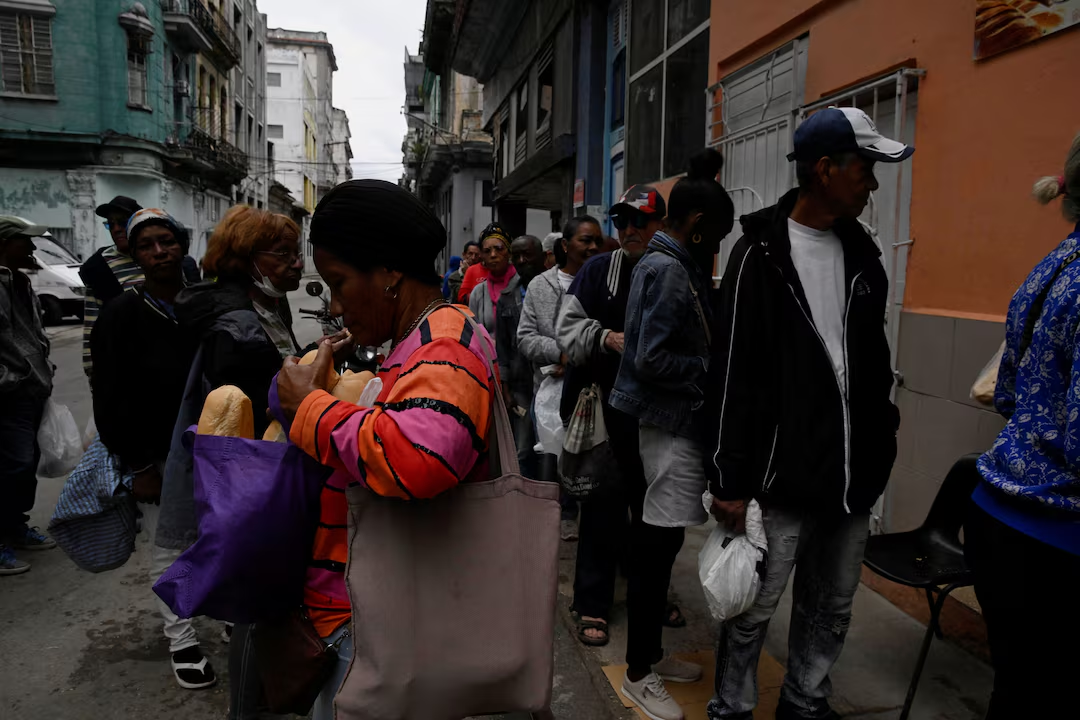
A severe economic crisis is deepening across Cuba, driven by intensified US pressure on Cuba that has cut vital oil imports and sent the national currency into freefall. Residents in Havana and beyond report daily life is now dominated by survival tactics, including navigating prolonged blackouts and scrambling for ever-scarcer, more expensive food and fuel. This latest US pressure on Cuba, leveraging tariffs on nations that supply the island with oil, represents a significant escalation in the long-standing economic confrontation. Consequently, the communist-run government faces a mounting humanitarian challenge as basic services falter and public patience wears thin.
The Cuban peso has lost over ten percent of its value against the dollar in just three weeks, a direct result of the financial isolation. This depreciation makes imported goods and black-market staples prohibitively expensive for citizens earning state salaries in local currency. Simultaneously, fuel shortages have become critical following the halt of shipments from key allies Venezuela and Mexico, themselves deterred by U.S. threats. The resulting transportation collapse and power generation deficits are now affecting the capital, which had previously been somewhat insulated from the island’s chronic infrastructure failures. The situation creates a volatile mix of desperation and resilience.
Fuel Shortages Paralyze Transportation and Commerce
The most visible symptom of the crisis is the paralysis of transportation. Lines for gasoline have grown dramatically at the few service stations in Havana that still have supplies. More critically, the state has suspended sales of fuel in the national peso, forcing transactions into U.S. dollars—a currency inaccessible to most Cubans. This policy effectively prices the average citizen out of mobility. Private taxi drivers and state bus services are being forced off the roads, creating a domino effect that stifles commerce and complicates every daily task, from commuting to work to procuring food.
Even alternative transportation methods are failing. Some drivers, like Alexander Leyet of Havana, invested in electric three-wheeled taxis to circumvent fuel dependency. Now, however, rampant blackouts lasting up to twelve hours prevent them from charging their vehicles. This collapse of both fuel-based and electric transport strands citizens and cripples the informal economy that many depend on. “You have to pay the price or stay home,” explained Daylan Perez, a 22-year-old who arranges private taxis, underscoring the impossible choices now facing ordinary Cubans. The logistical gridlock is a direct consequence of the external US pressure on Cuba.
Daily Life Reduced to Securing Basics
Interviews with dozens of Havana residents reveal a population focused almost exclusively on securing fundamental necessities. The routine involves waiting in lines for bread, coordinating around blackout schedules to pump water, and finding ways to cook without reliable electricity or gas. Mirta Trujillo, a 71-year-old street vendor, broke down in tears describing her inability to afford food after the government phased out its ration book system. “I’m not against my country… but I don’t want to die of hunger,” she stated, capturing the anguish of those caught between patriotism and need.
The electrical grid’s instability introduces constant danger and disruption. Blackouts now occur daily, not just in rural areas but in central Havana. Reuters witnessed an accident at a busy intersection where traffic lights failed due to a power outage. Raysa Lemu, a resident of Marianao, noted blackouts now last up to twelve hours and happen every day, compared to a few times per week previously. This erosion of basic infrastructure, from traffic control to refrigeration, compounds the hardship and chips away at societal normalcy. The cumulative effect is a grinding, exhausting struggle that defines existence.
Government Response and the Specter of Unrest
The Cuban government has declared an “international emergency,” condemning the U.S. tariff threats as an “extraordinary threat.” However, it has offered few concrete solutions to alleviate the immediate suffering of its citizens. Historically, the state has managed through similar crises by tightening control and rallying nationalist sentiment against U.S. aggression. While organized dissent remains sparse due to systematic crackdowns and widespread emigration, the interviews reveal a universal, albeit cautious, desire for change. No one Reuters spoke with disputed that the current trajectory is unsustainable.
The absence of mass protests does not indicate satisfaction. The state’s security apparatus is proficient at quelling organized opposition, and the population remembers the harsh consequences for demonstrators following the 2021 protests. Furthermore, a profound sense of exhaustion and futility permeates the public mood. “We’re drowning. But there’s nothing we can do,” said Aimee Milanes, a 32-year-old resident. This sentiment suggests unrest may manifest not as political uprising but as a further retreat into private survival strategies and a desperate surge in attempts to emigrate, continuing a recent exodus.
Historical Resilience Meets Unprecedented Pressure
Cuba has endured severe economic hardship for decades, from the “Special Period” after the Soviet Union’s collapse to more recent pandemic-induced contractions. Each time, predictions of systemic collapse have proven premature. The government leverages a narrative of defiant resistance against U.S. imperialism to foster unity. Julia Anita Cobas, a 69-year-old housekeeper, echoed this enduring perspective: “Since I was born the (United States) has been threatening us, and every day we deal with hardship. But we’ve survived it all.”
However, analysts note the current US pressure on Cuba is uniquely potent because it systematically blocks the workarounds Cuba previously developed. By targeting oil suppliers with secondary sanctions, the U.S. strategy closes the loopholes that kept fuel flowing. By forcing transactions into dollars, it exacerbates inequality and drains hard currency from the state. This constitutes a more comprehensive financial and logistical stranglehold than in past decades. The question is whether the state’s resilience and the population’s famed capacity for endurance can outlast this calibrated, external economic assault.
The Human Cost and International Outlook
The human cost is escalating daily. Elderly citizens like Mirta Trujillo face hunger. Workers like Julia Anita Cobas endure commutes that stretch to four hours round-trip. Families cope without light, cooling, or reliable water. While the U.S. administration views this pressure as a legitimate tool to force political change, the immediate consequences are borne by civilians. President Trump has openly stated he believes the island is “going down,” suggesting the hardship is an intended effect of the policy to undermine the government.
Internationally, the strategy draws criticism from some quarters as a form of collective punishment, while allies support it as necessary pressure on an authoritarian regime. The emergency will test the resolve of other nations to circumvent U.S. sanctions at the risk of facing tariffs themselves. For the Cuban people, the geopolitical maneuvering translates into an ever-tightening vise on their daily lives. Their immediate future appears bound to a worsening cycle of scarcity, inflation, and infrastructural failure, with little relief in sight from either domestic policy or external geopolitical shifts.