
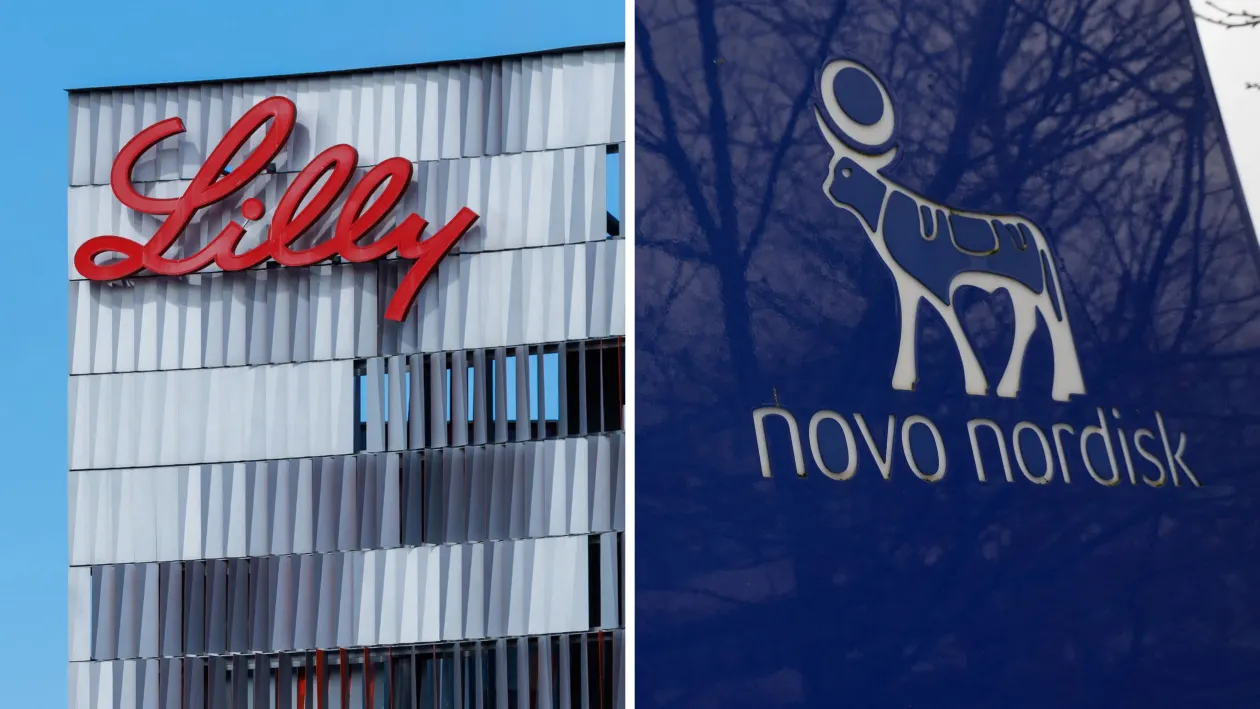
The battle between two pharmaceutical giants, Eli Lilly and Novo Nordisk, in the booming obesity and diabetes drug market is intensifying as 2026 progresses. While both companies are grappling with similar pricing pressures in the U.S. market, their futures seem to be diverging significantly. Eli Lilly, with its portfolio of blockbuster GLP-1 medications, is optimistic about its prospects, forecasting robust sales growth. In contrast, Novo Nordisk is bracing for a decline in sales, marking a critical shift in the competitive landscape.
Eli Lilly’s Strong Outlook Amidst Pricing Challenges
Eli Lilly has reported a positive 2026 outlook, anticipating sales of $80 billion to $83 billion, surpassing analysts’ expectations of $77.62 billion. This projection reflects the company’s strong position in the obesity and diabetes treatment markets, underpinned by the success of its blockbuster drugs, Zepbound and Mounjaro. Lilly’s momentum is driven by continued high demand for these products, particularly in the obesity segment, where its injectable drugs are proving to be the preferred choice among prescribers.
The company’s optimistic forecast comes despite ongoing price cuts in the U.S. market, which were implemented as part of a deal with the Trump administration to reduce the cost of obesity and diabetes treatments. While these price reductions are expected to dent revenue in the short term, Eli Lilly is confident that the increased volume of prescriptions, driven by wider access to these medications, will offset the pricing pressure. Lilly’s commitment to expanding its market share is further strengthened by the upcoming launch of its oral GLP-1 medication, orforglipron, which is set to compete directly with Novo’s Wegovy pill for obesity.
Market Share Shift: Eli Lilly Outpaces Novo Nordisk
One of the most significant developments in the obesity drug market has been Eli Lilly’s rise to dominance. The company’s injectable drugs, Mounjaro and Zepbound, have gained significant market share, with increasing adoption among healthcare professionals. Analysts attribute this success to the superior effectiveness and tolerability of Eli Lilly’s products compared to Novo Nordisk’s offerings. In particular, tirzepatide, the active ingredient in both Mounjaro and Zepbound, has shown superior weight loss results and better patient tolerance in head-to-head clinical trials conducted in 2024.
In contrast, Novo Nordisk, despite being the first to market with its obesity drugs, including the injectable Wegovy and the new oral Wegovy pill, is facing challenges in maintaining its market leadership. Eli Lilly’s ability to capture a larger share of the obesity treatment market has been underscored by its more aggressive pricing strategies and its earlier foray into direct-to-consumer advertising. Lilly’s market position is further bolstered by its patent exclusivity on tirzepatide, which is expected to be protected until the late 2030s. This long-term exclusivity provides Lilly with a significant advantage over its competitors, as it continues to expand its reach in both established and emerging markets.
Novo Nordisk’s Struggles: Pricing Pressure and Patent Expiry
On the other hand, Novo Nordisk is entering 2026 with a more cautious outlook. The company has warned that it expects its sales and profits to decline by 5% to 13% this year. Several factors contribute to this downturn, including the expiration of patents for its blockbuster obesity and diabetes drugs in key international markets such as China, Brazil, and Canada. These expirations are expected to lead to increased competition from generics and biosimilars, which will put further pressure on Novo Nordisk’s pricing structure.
Moreover, the pricing pressure in the U.S. market, compounded by the price reduction agreements with the Trump administration, is expected to weigh heavily on Novo’s revenue streams. While Novo Nordisk remains optimistic about its products, including the oral Wegovy pill, it faces stiff competition from Eli Lilly’s superior offerings in the obesity treatment market. Analysts suggest that Novo’s efforts to maintain market leadership will be challenged by Lilly’s increasing market share and the ongoing demand for its innovative products.
The Launch of Oral GLP-1 Medications: A New Frontier
One of the most closely watched developments in the obesity drug market in 2026 is the competition between Eli Lilly’s orforglipron and Novo Nordisk’s Wegovy pill. Novo Nordisk’s oral Wegovy pill has already made a splash in the U.S. market, with 50,000 weekly prescriptions filled within three weeks of its launch. This impressive uptake has been fueled by the company’s aggressive marketing campaign and the strength of the Wegovy brand.
However, Eli Lilly is set to introduce its own oral GLP-1 medication later in 2026, and it will be interesting to see how the two products compare in terms of patient preference and market performance. Eli Lilly’s orforglipron is a small-molecule drug that is more easily absorbed by the body and does not require the strict dietary restrictions that Novo’s oral Wegovy pill imposes. For example, patients taking the Wegovy pill are instructed to limit their water intake to four ounces and must wait 30 minutes before consuming any food or additional liquids. This requirement could limit the pill’s adoption among patients who find the restrictions inconvenient.
Eli Lilly’s orforglipron, on the other hand, offers greater convenience, with no such dietary restrictions, potentially making it a more attractive option for patients seeking a simpler treatment regimen. Analysts believe that this convenience advantage, coupled with Lilly’s superior product effectiveness, could give it an edge in the race for market dominance in the oral GLP-1 segment.
The Future of the Obesity and Diabetes Market
As both Eli Lilly and Novo Nordisk continue to vie for dominance in the obesity and diabetes drug markets, the competition is expected to intensify. Eli Lilly’s market share gain, fueled by the success of its injectable drugs and its upcoming oral GLP-1 medication, positions the company as the leader in this space. With the backing of a strong patent portfolio and a growing base of prescribers, Lilly is well poised to capitalize on the expanding demand for obesity treatments, especially with the introduction of Medicare coverage for obesity treatments in the U.S. in 2026.
On the other hand, Novo Nordisk faces several challenges, including pricing pressures, expiring patents, and increasing competition from Eli Lilly. While Novo’s Wegovy pill has been well-received, it remains to be seen whether the company can maintain its position in the face of Lilly’s growing market share and superior product offerings.
Overall, the competition between these two pharmaceutical giants will shape the future of the obesity and diabetes drug market in 2026 and beyond. With both companies poised to continue innovating and expanding their portfolios, patients and healthcare professionals alike can expect a more competitive and dynamic market in the coming years.