

Mark Carney’s ascension to the Canadian Prime Minister’s office has brought with it a dramatic shift in the country’s governance, marked by a clear and unambiguous rejection of the policies and ideologies of his predecessor, Justin Trudeau. The rapidity and thoroughness of Carney’s departure from Trudeau’s governing model is unprecedented in Canadian political history, especially given that both men hailed from the same political party and Carney had even acted as an economic advisor to Trudeau before taking office.
Whereas most political transitions, even within the same party, involve gradual changes, Carney has moved with remarkable speed to undo much of Trudeau’s agenda, breaking with key aspects of his predecessor’s policies, rhetoric, and governance style. This shift has not only left many political observers stunned but also reshaped Canada’s domestic and international priorities.
Rejection of Trudeau’s Key Policies: A Swift and Decisive Break
One of the most notable aspects of Carney’s first few months in office has been his forceful departure from the policy framework that dominated the Trudeau years. Carney’s rejection of Trudeau’s approach to climate change and his shift away from a net-zero agenda are perhaps the most striking examples of this turnaround. Under Trudeau, the goal of achieving net-zero emissions by 2050 was central to the government’s economic and environmental strategy. Carney, however, has backed away from this commitment, acknowledging the challenges and uncertainties around achieving such ambitious goals.
In the early years of his tenure as a public figure, Carney was seen as a strong proponent of progressive environmental policies, but market and political pressures have led him to reconsider his stance. He is now focusing on strengthening Canada’s position as a global leader in natural resources, a stance that echoes former Prime Minister Stephen Harper’s vision of Canada as a “natural resources superpower.” Ironically, this is the same vision that Trudeau and his supporters had once criticized Harper for promoting, but now Carney has embraced it as part of his strategy to boost Canada’s economic resilience.
This rapid shift in policy represents a profound break with the Trudeau legacy, which had prioritized ambitious climate change commitments over resource extraction and industrial growth. Carney’s reorientation of Canada’s economic priorities now centers on increasing the output of critical natural resources, such as oil, gas, and minerals, while sidestepping the more symbolic, aspirational rhetoric that characterized Trudeau’s leadership.
Ideological Departure: A Turn Towards Pragmatism
The ideological shift Carney has undertaken extends beyond environmental policy. Throughout Trudeau’s tenure, the Liberal government embraced a platform steeped in values-driven policies, particularly in areas like gender equality, identity politics, and progressive social issues. Carney, however, has distanced himself from these priorities. While he still champions inclusive and multilateral ideals, his focus is less on symbolic gestures and more on pragmatic governance, emphasizing the need for economic productivity, national security, and practical execution.
Carney’s stance on social issues, particularly those related to gender, has been starkly different from Trudeau’s. The previous prime minister was famous for his self-proclaimed “feminist foreign policy,” a policy Carney has now cast aside in favor of a more traditional, sometimes criticized, approach to global diplomacy. His critics have noted that his cabinet appointments have lacked gender diversity, with some accusing him of “gender-cleansing” the government by sidelining women in key political roles.
On the domestic front, Carney has also discarded Trudeau’s focus on identity politics and critical race theory. Carney’s emphasis is now on fostering economic growth through more efficient governance and a clear-eyed focus on Canada’s financial and security challenges. For Carney, it’s about achieving concrete outcomes rather than engaging in what some view as empty cultural debates.
Shifting Canada’s Economic Strategy
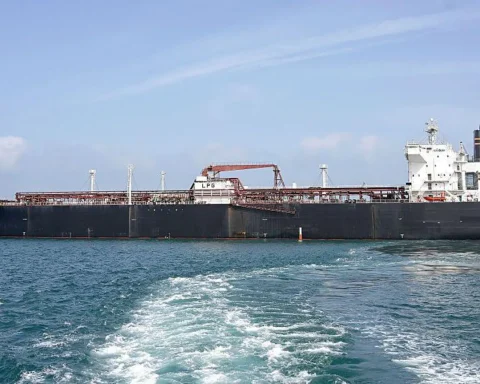
Carney’s approach to Canada’s economic future is rooted in a pragmatic vision that reflects his deep concern about the country’s economic stability in the face of growing global uncertainties. One of Carney’s most ambitious goals has been to shift the Canadian economy away from its heavy reliance on the U.S. market. While Canada remains closely tied to the United States, Carney has taken steps to diversify trade relations with other global powers, most notably China. His administration’s focus on a strong infrastructure agenda, including projects like high-speed rail and expanded port facilities, is designed to enhance Canada’s ability to ship natural resources to international markets.
This shift is also evident in Carney’s commitment to large-scale energy projects. Canada is positioning itself to become a leader in green energy, with plans to develop small modular nuclear reactors, offshore wind farms, and expand its liquefied natural gas production. These initiatives are part of a broader strategy to create jobs and stimulate economic growth while reducing reliance on the U.S. as Canada’s primary trade partner.
Additionally, Carney has prioritized the development of critical minerals, many of which are found in Canada’s remote northern regions. These minerals, essential for the manufacturing of green technologies such as electric vehicles, position Canada as a key player in the global green tech revolution. This ambition marks a significant departure from Trudeau’s focus on reducing emissions and instead embraces the potential for resource extraction as a means of economic empowerment.
Centralizing Power: A Shift Toward Government-Led Economic Strategy
In his quest to reorient Canada’s economic strategy, Carney has also embraced a more active role for the government in industrial policy. His government has launched the Major Projects Office (MPO), an initiative aimed at accelerating the development of critical infrastructure projects, such as energy grids, railways, and ports. This move signals a shift away from Trudeau’s more decentralized, market-driven approach to economic development.
The MPO represents a philosophical shift in how Carney views the role of the state in driving economic growth. By streamlining bureaucracy and making decision-making more agile, Carney intends to cut through red tape and facilitate the quick execution of major projects. This marks a stark contrast to Trudeau’s preference for a more consultative approach, which many argue slowed down the approval of key infrastructure projects.
Brian Rathbun, a professor at the University of Toronto’s Munk School of Global Affairs, argues that Carney’s more centralized approach is essential given the changing global economic landscape. “As access to the U.S. becomes more uncertain, the government must take a much more active role in reorienting the economy,” Rathbun said. This view highlights the increasing importance of government intervention in steering Canada’s economic future, particularly as trade relations with the U.S. grow more unpredictable.
The Global Stage: Carney’s Diplomatic Shifts
Carney’s policies on the global stage also reflect a more pragmatic approach compared to Trudeau’s idealistic rhetoric. While Carney shares Trudeau’s commitment to multilateralism and a rules-based international order, his government has adopted a more cautious stance on foreign interventions. In particular, Carney has faced criticism for his approach to the Middle East, particularly in regard to his stance on Israel and Palestine. His government’s recognition of Palestine and its support for a peace plan that some critics view as overly conciliatory has raised concerns about Carney’s commitment to moral clarity in foreign policy.
Despite these criticisms, Carney’s broader foreign policy approach aims to balance national interests with global cooperation. However, as Canada’s geopolitical landscape becomes more complex, especially with rising tensions in the Middle East, Carney may find it increasingly difficult to reconcile domestic political pressures with the need for clear, principled international action.