
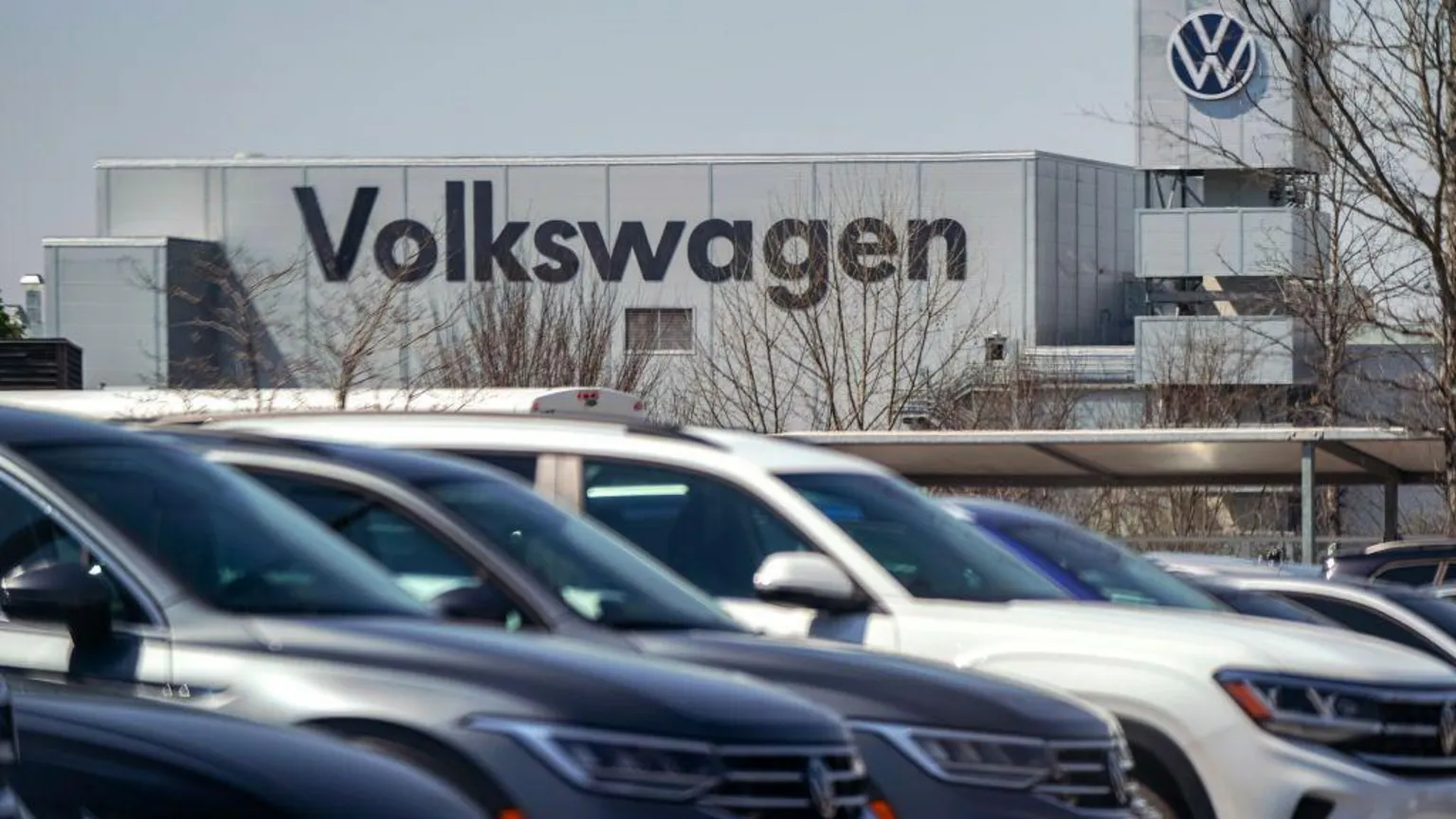
Volkswagen job cuts have moved to the center of debate in Germany’s industrial sector after the carmaker announced plans to cut around 50,000 positions by 2030. The move comes as Europe’s largest car manufacturer faces declining profits, rising costs, and growing global competition.
The company confirmed that the Volkswagen job cuts will affect its operations across Germany and span several brands within the group, including Audi and Porsche. Executives say the decision reflects structural changes in the global auto market, where electric vehicle investments and geopolitical pressures have reshaped the industry.
Volkswagen reported that its profits dropped sharply in 2025, marking the lowest earnings level the group has recorded since 2016. As a result, company leadership now plans aggressive cost reductions while preparing for a difficult transition toward electrification.
Volkswagen job cuts signal major industry shift
Chief executive Oliver Blume revealed the scale of the Volkswagen job cuts in a letter to shareholders released alongside the company’s annual report. According to the document, the cuts will take place gradually across the decade and form part of a broader restructuring plan.
Blume explained that the company now operates in a very different economic environment. Demand patterns have changed, production costs have increased, and global competition has intensified. Because of these pressures, the company believes it must reshape its workforce to remain competitive.
The Volkswagen job cuts will also build on an earlier agreement with German labor unions. That agreement already planned the reduction of more than 35,000 jobs by 2030 through voluntary programs and retirement incentives. Management described the approach as socially responsible and aimed at avoiding abrupt layoffs.
However, the overall target now stands at roughly 50,000 positions. The cuts are expected to save the company about €15 billion as Volkswagen attempts to stabilize profitability.
Profit collapse drives Volkswagen job cuts
Volkswagen’s financial results show the scale of the pressure facing the company. Net profit after tax fell from €12.4 billion to €6.9 billion in the most recent financial year. That decline represents a drop of roughly 44 percent.
Several factors contributed to the steep decline. First, demand for Volkswagen vehicles in China has weakened significantly. For many years China served as one of the group’s most profitable markets. Recently, however, domestic Chinese brands have captured growing market share.
Second, Chinese manufacturers have expanded into Europe. Their arrival has intensified competition across price segments. As a result, Volkswagen now faces pressure both in Asia and in its home market.
Finally, the transition toward electric vehicles has raised production costs. Building new battery platforms and factories requires massive investment. At the same time, consumer demand for electric cars has proven less predictable than earlier forecasts suggested.
Trade tensions worsen outlook
Global trade tensions have further complicated the company’s recovery plans. The United States recently imposed 25 percent tariffs on imported vehicles, creating another obstacle for European manufacturers.
These tariffs have increased export costs and forced companies to reconsider supply chains. For Volkswagen, the tariffs add to an already challenging environment that includes high energy prices and supply disruptions.
As a result, the company now expects modest profitability in the near term. Executives forecast a core profit margin between 4 percent and 5.5 percent for the coming year. Even the upper end of that range remains close to the 4.6 percent margin recorded recently.
Finance chief Arno Antlitz warned shareholders that the current margin remains unsustainable over the long term. He emphasized that the company must act decisively to restore financial stability.
Read Also
Bangladesh tariff deal boosts textile access to US market
Takaichi election win raises stakes for Japan’s economy
Target job cuts signal renewed push to revive US stores
Cost reductions become priority
Volkswagen executives say the Volkswagen job cuts form part of a broader strategy focused on cost control. Antlitz told investors that strict financial discipline will guide the company’s next phase.
Management plans to reduce operational spending across multiple divisions. In addition, Volkswagen intends to streamline production and focus more resources on technologies that support long-term growth.
However, these measures may also reshape the structure of Germany’s auto industry. Volkswagen remains one of the country’s largest employers. Therefore, changes in its workforce could influence suppliers, local economies, and regional labor markets.
Union leaders have already signaled concern about the scale of the planned reductions. Nevertheless, negotiations with worker representatives continue, and both sides have emphasized the need to protect jobs where possible.
Electric vehicle transition raises pressure
The shift to electric mobility remains a key factor behind the restructuring. Automakers worldwide have invested billions of euros to build electric vehicle platforms and battery supply chains.
Volkswagen has pursued one of the industry’s most ambitious electrification strategies. Yet the company still faces strong competition from Tesla and Chinese EV manufacturers.
Because electric vehicles require different manufacturing processes, companies often need fewer workers in some areas. Consequently, traditional production roles may decline while demand grows for software engineers and battery specialists.
This transformation partly explains the scale of the Volkswagen job cuts announced in Germany.
Global competition intensifies
Competition within the global auto market continues to increase. Chinese automakers have gained ground in electric vehicle technology and production efficiency. Their expansion into European markets has intensified pricing pressure.
Meanwhile, European manufacturers must manage stricter environmental regulations and high operating costs. These challenges force companies to rethink strategies while maintaining innovation.
Volkswagen believes that disciplined cost management will help it navigate this transition. Nevertheless, the company acknowledges that recovery may take time.
Read Also
Newtonz Group
Disney parks face drop in international visitors but US bookings set to grow
Gold and silver prices fall after record highs amid political turmoil
Trump raises tariffs
Industry analysts say the coming years will determine whether Volkswagen’s restructuring strategy can restore its financial strength. For now, however, the company’s leadership remains focused on stabilizing profits while managing the consequences of sweeping Volkswagen job cuts.