

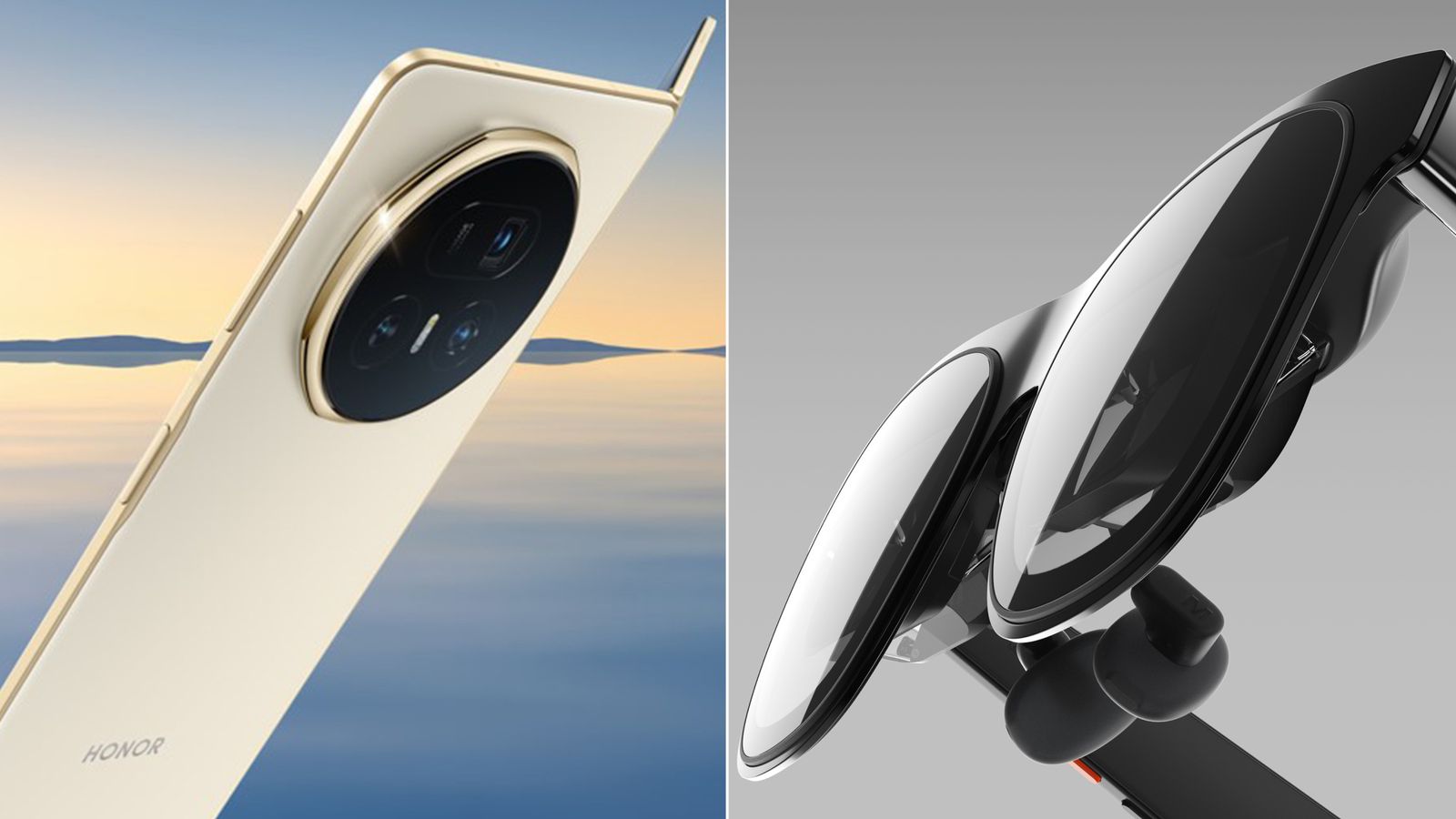
The technology industry is experiencing a significant shift toward smaller, more compact devices. Foldable phones get thinner with each new generation, as manufacturers compete to create the slimmest models possible. This trend represents a major focus for leading tech companies worldwide.
Samsung recently released its Galaxy Z Fold 7, which measures just 4.2mm when open. This makes it one of the slimmest folding phones ever produced. The achievement demonstrates significant progress in miniaturization technology. Samsung’s engineering teams have worked extensively to reduce device thickness while maintaining functionality.
Moreover, Honor, a spin-off from Huawei, is preparing to ship its latest foldable device. The Honor Magic V5 claims the title of the world’s slimmest foldable phone. When folded, it measures only 8.8mm thick. However, when open, it becomes even thinner at just 4.1mm. This represents a remarkable engineering accomplishment in mobile device design.
Additionally, Apple is expected to enter the foldable market in the second half of next year. Analysts at JPMorgan recently published reports confirming these expectations. Apple’s entry would intensify competition in the ultra-slim device category. The company’s reputation for innovative design could set new standards for the industry.
The race to miniaturize technology is accelerating rapidly. Companies are investing heavily in research and development. The ultimate goal is to create the next evolution in consumer devices. Whether through wearable technology or foldable screens, miniaturization offers enormous market potential.
Wearable devices include smartglasses, watches, and rings. Each category presents unique challenges for engineers. Making products small enough requires innovative solutions. Companies that succeed in miniaturization can capture significant market share. Consumer demand for portable, powerful devices continues growing.
Despite being thinner than previous models, Honor’s Magic V5 offers improved specifications. The device provides better battery life, processing power, and camera capabilities. Hope Cao, a product expert at Honor, explained these improvements. She attributed progress to silicon carbon battery technology. These next-generation batteries offer higher energy density than traditional lithium-ion options.
Furthermore, Honor utilized its own AI model during development. The company used artificial intelligence to test and optimize design choices. This approach helped create the slimmest and most durable configuration. AI-assisted design is becoming increasingly common in technology development.
Nevertheless, miniaturization research extends beyond folding phones. Augmented reality glasses represent another frontier for compact technology. Xreal has been at the forefront of AR glasses development. The company was among the first to release viable consumer models.
Ralph Jodice from Xreal discussed engineering challenges with Sky News. He explained that shrinking powerful AR technology into everyday sunglasses is difficult. The goal is creating devices that look and feel normal. However, they must also display complex images on the lenses.
Xreal’s glasses can display images like something from a science fiction movie. Users can connect USB-C compatible devices to create IMAX-sized screens anywhere. This includes phones, laptops, and handheld consoles. The technology transforms any space into a personal theater.
Experts at The Metaverse Society suggest reducing wearable device costs. They recommend shifting computing burden from headsets to mobile phones. This approach would use phone batteries and processors to power glasses via cable. Such solutions could make advanced AR more accessible to consumers.
However, despite these challenges, companies continue investing heavily. Meta is also competing for dominance in the miniature technology market. The company’s Ray-Ban Meta AI glasses showcase this commitment. These glasses differ from Xreal’s projection models. Instead, they capture photos, footage, and sound.
When connected to smartphones, Ray-Ban glasses can use 5G connections. Users can ask Meta’s AI about what they’re observing. For example, they might inquire about saving a particular type of houseplant. This integration shows how miniaturized technology enhances daily life.
Gareth Sutcliffe, a tech analyst at Enders Analysis, spoke with Sky News about wearables. He described them as a “green field opportunity” for Meta and Google. These companies could capture markets of hundreds of millions of users. Success would depend on devices selling at rates similar to mobile phones.
Li-Chen Miller, Meta’s vice president of product and wearables, recently commented. She described building comfortable glasses with onboard technology as extremely challenging. Users must be willing to wear them for extended periods. Additionally, they must feel comfortable around friends and family.
Mr. Sutcliffe noted that Meta’s R&D spending on wearables seems extraordinary currently. However, if the category explodes in popularity, it will be seen as a great strategic bet. The investment could yield tremendous returns in the future.
Facebook founder Mark Zuckerberg has long-term goals for smartglasses. He wants to combine Xreal and Ray-Ban capabilities into one device. This would create glasses capable of both capturing content and displaying graphics. However, despite recently showcasing a prototype, the company emphasized readiness issues.
The company was careful to point out consumer market readiness concerns. Significant development remains before full commercial release. This race requires patience and sustained investment over many years.
As Sutcliffe told Sky News, this is “a decade-long slog” rather than a sprint. However, seventeen years after the first iPhone release, people wonder what comes next. Smartphones have dominated personal technology for nearly two decades. Now, a pair of glasses might represent the next major innovation.
The foldable phones get thinner trend shows no signs of slowing. Each new generation pushes boundaries further. Companies continue investing billions in research and development. Consumer expectations for smaller, more powerful devices drive innovation. The future of personal technology may indeed be wearable and virtually invisible.
READ: Galaxy Z Fold7: Powerful Versatility in the Thinnest, Lightest Z Fold Yet