

The annual meeting of the World Economic Forum opens in Davos amid the most unstable global policy environment in two decades. Business leaders, policymakers, and investors arrive facing rising trade barriers, geopolitical tension, and weakening multilateral cooperation.
Uncertainty now defines the global outlook. Companies no longer plan for growth alone. Instead, they focus on resilience, supply chain protection, and political risk management.
At the center of attention stands Donald Trump, whose return to global leadership continues to reshape the tone and priorities of Davos.
Trump’s America First Agenda Reshapes Davos Dynamics
Trump has long opposed globalism. Yet, he continues to engage directly with the Davos platform. His presence disrupts the forum’s traditional consensus-driven culture.
The president arrives with a powerful delegation. It includes senior figures responsible for trade, energy, finance, and technology policy. Their mission is clear. They intend to advance US interests first.
During Trump’s leadership, the United States has shifted away from its post-1945 role as a global rule-maker. Instead, it now challenges institutions and norms it once built. This shift forces global companies to rethink long-term assumptions.
Global Policy Risk Hits a Twenty-Year High
New research released by the WEF highlights the scale of today’s challenges. The study, conducted with Boston Consulting Group and IMD Business School, shows policy uncertainty at its highest level since the early 2000s.
Several forces drive this trend. Governments weaken multilateral frameworks. Trade policy grows more unpredictable. Economic tools now serve geopolitical goals.
This environment complicates decision-making for global firms. Long-term investment becomes harder. Strategic planning now requires constant reassessment.
Geopolitical Conflict Poses Severe Economic Risks
Warnings from the insurance sector reinforce these concerns. Lloyd’s of London estimates that a major geopolitical conflict could cost the global economy US$14.5 trillion over five years.
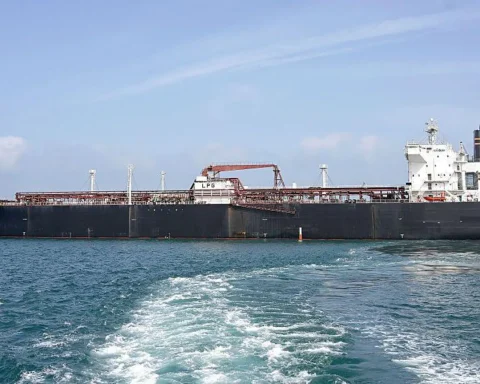
Global trade remains highly exposed. More than 80 percent of world trade moves by sea. Any disruption to major shipping routes would ripple through supply chains quickly.
Energy, food, and manufacturing sectors face the highest risks. Businesses now treat geopolitical risk as a core operational issue.
Trade Tariffs Re-Emerge as a Political Weapon
Trump recently intensified global anxiety with new tariff threats. He warned that any country trading with Iran could face a 25 percent tariff.
This statement sent shockwaves through global markets. Iran trades heavily with China, India, Turkey, Iraq, and the United Arab Emirates. Any disruption would affect multiple regions at once.
The move highlights a broader trend. Trade policy now acts as a direct tool of political pressure. Companies must prepare for sudden regulatory shifts.
A Rare Note of Optimism Emerges at Davos
Despite these risks, Davos 2026 still offers moments of hope. One major development stands out. Trump and Volodymyr Zelensky plan to sign a US$800 billion agreement focused on rebuilding Ukraine.
The deal builds on a 2025 minerals agreement. That earlier pact gave US investors priority access to future Ukrainian mining projects. The new agreement aims to unlock private capital, loans, and grants.
Ukraine hopes the investment will accelerate reconstruction and stabilize its economy. For global markets, the deal signals that cooperation remains possible.
Davos and Its Legacy of Dialogue
The World Economic Forum has a long history of convening rivals. Past Davos meetings hosted landmark discussions. These include early talks between Greece and Turkey, North and South Korea, and leaders involved in German reunification.
That legacy still matters. Even in divided times, Davos provides space for dialogue. The Ukraine deal reflects this role.
Global Cooperation Is Changing, Not Disappearing
A second WEF report offers further insight. Developed with McKinsey & Company, the Global Cooperation Barometer 2026 shows resilience in selective cooperation.
Traditional multilateral frameworks continue to weaken. However, targeted and regional partnerships grow stronger. Countries now collaborate where interests align.
Technology leads this shift. Data flows expand. International bandwidth has quadrupled since before the pandemic. Cooperation around artificial intelligence and digital infrastructure continues to rise.
What Davos 2026 Means for Business Leaders
The message from Davos remains complex. Risks dominate the outlook. Yet, opportunity still exists.
Companies that understand new cooperation patterns can adapt faster. Flexibility now matters more than scale. Regional strategies may outperform global ones.
In a volatile and uncertain world, leaders who balance caution with selective engagement will gain an edge.