
Tesla CEO Elon Musk has announced a significant shift in the company’s focus, ending the production of its iconic Model S and Model X electric vehicles. These high-end models, which helped cement Tesla’s position in the EV market, will no longer be part of the company’s lineup as it moves forward with a bold new direction—building humanoid robots. The decision marks a dramatic pivot for the company, which has long been at the forefront of the electric vehicle revolution.
A New Vision for Tesla: Robots Over Cars
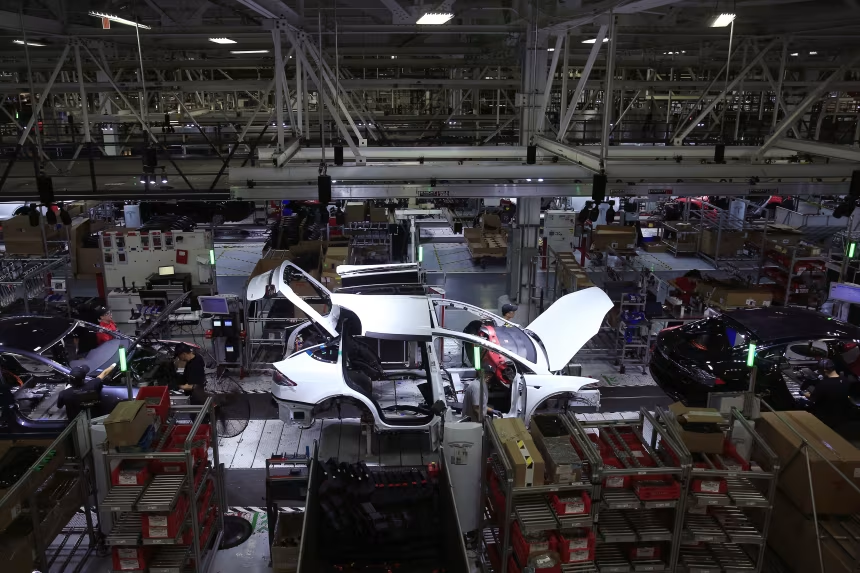
During Tesla’s latest earnings call, Musk confirmed the end of production for the Model S and Model X, models that have been some of the company’s most expensive offerings. Musk explained that the factory space previously dedicated to these electric vehicles would now be repurposed to manufacture humanoid robots—a critical part of Tesla’s new vision. In Musk’s eyes, the future of Tesla lies not just in electric vehicles but in artificial intelligence and automation, with robots becoming central to the company’s operations.
While the news is a blow to the EV lineup, Musk made it clear that Tesla’s future isn’t focused on electric vehicles alone. He hinted at a dramatic transformation, predicting that the Cybercab, a self-driving, two-seat vehicle designed to operate as a robotaxi, would eventually outsell all of Tesla’s current vehicles combined. The robotaxi, which is expected to be fully autonomous, marks Tesla’s long-term plan to move beyond traditional car sales into the world of autonomous transportation.
A Struggling EV Business
Despite the ambitious vision for Tesla’s future, the company is facing significant financial struggles. In the fourth quarter of 2025, Tesla’s adjusted income fell by 16%, while its net income dropped a staggering 61%, signaling a downturn in the company’s profitability. This decline is part of a larger trend, with Tesla’s earnings falling in nine of the last ten quarters. The company’s annual income in 2025 was only 30% of what it had been in 2022, its most profitable year to date.
Tesla’s electric vehicle sales have also experienced a sharp decline, with the company posting its largest-ever year-over-year sales volume drop. Once known for its rapid growth, Tesla is now grappling with slowing demand, particularly in the U.S. market, where sales fell after the elimination of the $7,500 tax credit for EV buyers. Additionally, Musk’s controversial political activities and his ties to President Donald Trump have alienated some American and European consumers, further impacting Tesla’s reputation.
Increased Competition and Loss of Market Leadership
Tesla’s dominance in the electric vehicle market is also being challenged by growing competition, particularly from Chinese automakers. In 2025, Tesla lost its title as the world’s largest EV maker to Chinese automaker BYD, a company that has surged ahead with a variety of affordable electric vehicle models. Tesla is also facing tough competition from both traditional automakers and new entrants, particularly in the Chinese market, which remains one of Tesla’s largest global revenue sources.
Musk’s aggressive push for innovation through autonomous vehicles and robots has the potential to redefine Tesla’s role in the future of transportation. However, the company’s struggle to maintain its position in the EV market poses a challenge to these lofty ambitions.
The Road Ahead for Tesla
As Tesla pivots away from its core business of electric vehicles, the company faces both significant risks and exciting opportunities. The success of its new focus on humanoid robots and autonomous transport will depend on whether Tesla can overcome its current financial hurdles and compete with growing industry rivals. The road ahead for Tesla may no longer be paved with the same kind of growth that fueled its rise, but Musk’s vision of AI-driven transportation is set to transform the company in ways that go far beyond the automotive world.
While Tesla’s future may look drastically different from the car company it once was, its ability to deliver on the promises of self-driving vehicles and humanoid robots will be crucial in determining whether the company can reclaim its position as an industry leader.