

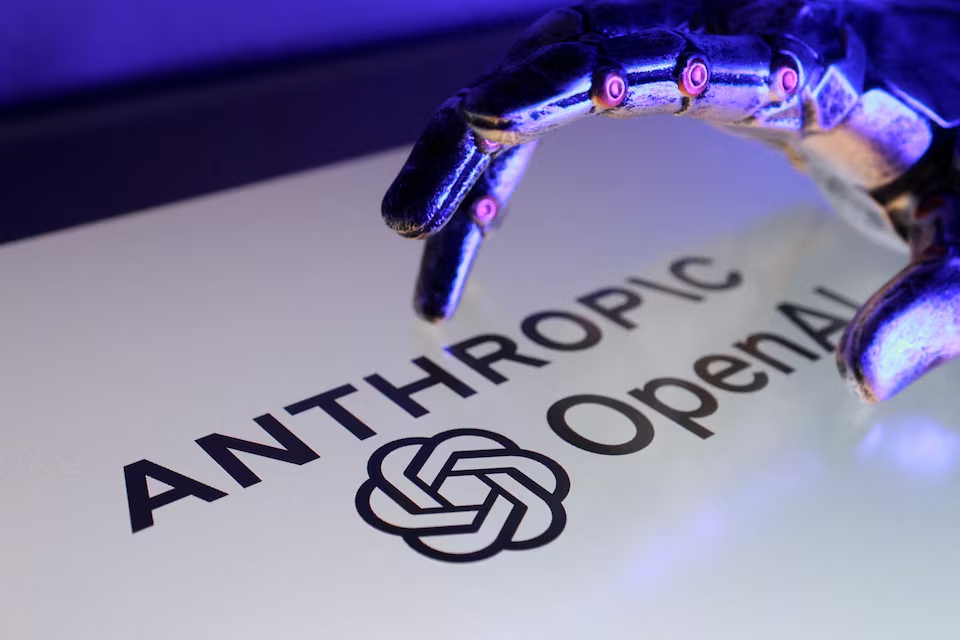
Anthropic is spending millions on Super Bowl ads to directly attack rival OpenAI over its plan to sell advertisements in ChatGPT. The 30-second commercial, set to air during Super Bowl LX, features a thinly veiled jab at OpenAI’s strategy. In the ad, a muscular man offering workout advice abruptly promotes shoe inserts, mimicking an intrusive chatbot ad. The punchline declares, “Ads are coming to AI. But not to Claude,” referencing Anthropic’s own chatbot. This public spat marks a significant escalation in the competition between the two leading artificial intelligence companies. OpenAI CEO Sam Altman responded by calling the Anthropic ad “deceptive,” defending his company’s respect for users.
The Super Bowl provides a massive platform for this corporate rivalry. An estimated 120 million viewers will watch the game on NBC. The average cost for a 30-second spot is $8 million, with some exceeding $10 million. For Anthropic, this is the first Super Bowl campaign for its Claude AI. OpenAI is also using the event to promote its software coding product, Codex. The high-stakes advertising battle comes as both unprofitable companies seek to attract consumers, win business customers, and position themselves for potential public listings later this year. The public argument, according to PR experts, reflects a “very human urge” to compete openly, even among AI labs, and will likely raise awareness for both brands.
The Ad Content and OpenAI’s Response
The Anthropic commercial depicts a scenario designed to criticize ad-supported AI. A scrawny young man asks a muscular bystander for fitness advice. The bystander responds in a robotic tone, offering a personalized plan. However, he first inserts a promotion for shoe inserts for “short kings.” This satirizes the fear of irrelevant, disruptive ads polluting AI interactions. The clear message is that Claude will remain ad-free, positioning it as a purer user experience. Sam Altman’s reaction was swift and critical. He called the ad deceptive, stating OpenAI would never implement ads in the clumsy, disrespectful manner portrayed. “We’re not stupid,” Altman said in a podcast interview. “We understand that if we did something like what those ads depict, people will rightfully stop using our product.”
Market Context and the Fight for Users
The Super Bowl ads underscore the intense competition for market share in consumer AI. Both Anthropic and OpenAI are burning through capital to develop and market their models. They are also courting enterprise clients for lucrative API business. A public listing looms for both, making brand perception and user growth critical. The ad-free promise could be a key differentiator for Anthropic if OpenAI proceeds with advertising on its free ChatGPT tier. However, advertising represents a potential revenue stream to support expensive AI operations. The clash highlights the strategic crossroads for AI companies: monetize through potentially intrusive ads or find alternative funding, like subscription fees or enterprise sales. The Super Bowl spotlight amplifies this fundamental business model debate.
Consumer Perception and the Challenge of AI Marketing
Ad industry experts note the broader challenge both companies face. Public perception of AI remains cautious. Only 17% of U.S. adults believe AI will have a positive impact over the next two decades. Therefore, Super Bowl ads must strike a delicate balance. They need to promote familiarity and comfort without alienating a skeptical general audience. Sean Wright of Guideline emphasized finding “the right tone.” OpenAI’s recent ad, showing runners using ChatGPT for motivation, was not well-received, according to measurement firm iSpot. Even Anthropic’s attack ad evoked negative reactions in consumer testing. This indicates the difficulty of crafting resonant narratives for a technology that many still find abstract or threatening. The Super Bowl gamble is as much about normalizing AI as it is about winning a corporate feud.
The PR Calculus of a Public Feud
Public relations professionals see strategic value in the open rivalry. Sam Singer of Singer Associates said the dispute makes the Super Bowl more interesting and forces people to think about both Claude and ChatGPT. This “compelling battle” between similar products can benefit both parties through increased category awareness. The feud generates media coverage beyond the paid ad slots, amplifying their message. For Anthropic, attacking the market leader positions it as a principled alternative. For OpenAI, defending its plans allows it to frame its approach as thoughtful and user-respectful. The public argument, while seemingly petty, is a calculated engagement in the battle for narrative control in a nascent and rapidly evolving market.
Broader Implications for the AI Industry
This high-profile clash signals the AI industry’s transition from pure research to consumer marketing warfare. As products seek mainstream adoption, traditional competitive tactics like comparative advertising emerge. The outcome of this ad spat may influence how other AI companies approach monetization and marketing. If consumers strongly prefer an ad-free experience, it could pressure OpenAI to reconsider or carefully limit its advertising ambitions. Conversely, if the market accepts non-intrusive ads for free access, Anthropic’s position might become a niche premium stance. The Super Bowl serves as a giant testing ground for these propositions. Ultimately, the millions spent on these commercials are a bet on shaping the fundamental relationship between users, AI assistants, and the advertisements that may soon inhabit them.